
Blog
Showing all articles
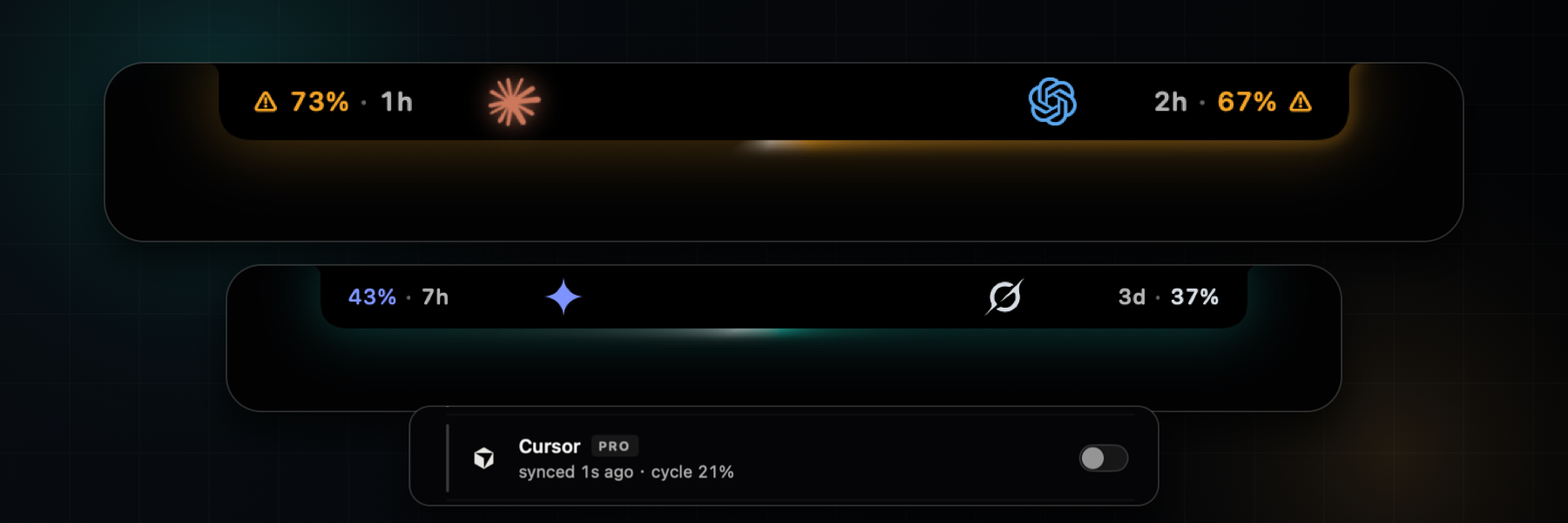
Agent Island 2.1.2
Five-provider status and usage visibility, refreshed reporting, and the latest verified release notes for macOS and Windows
Read article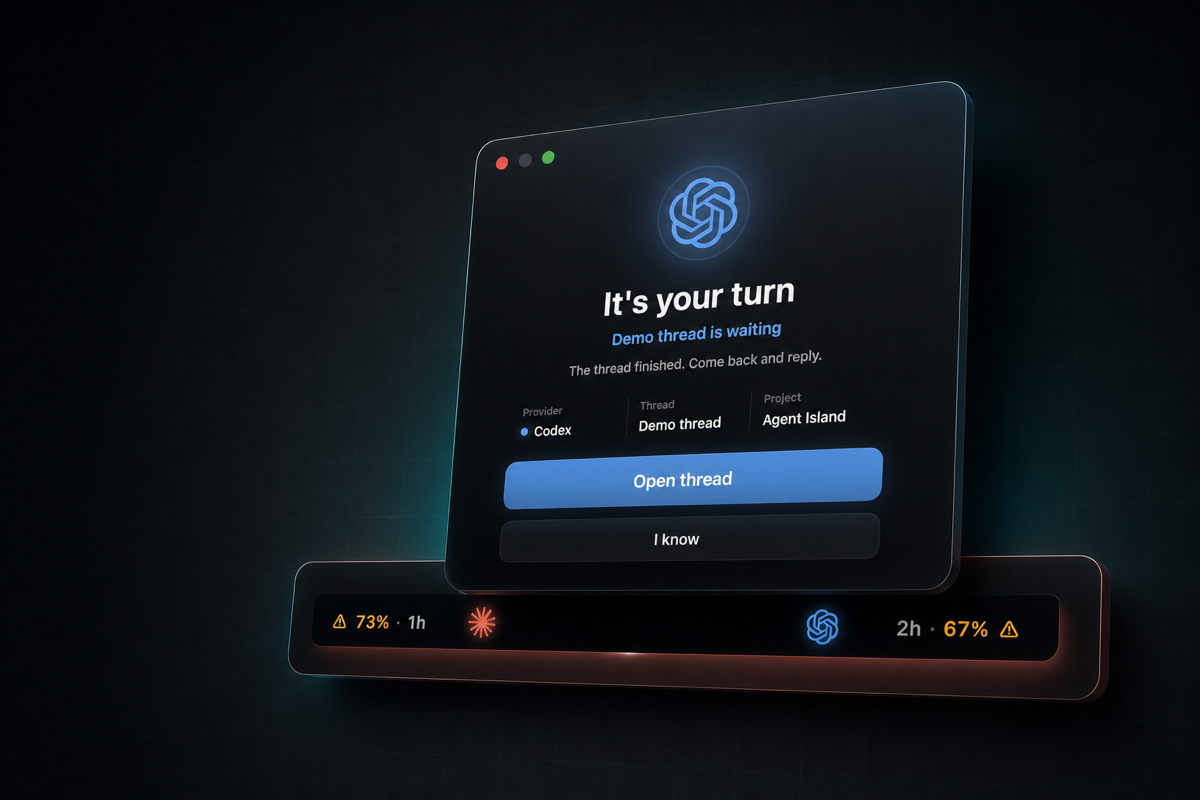
Get one notification when a Codex turn finishes
Require a fresh terminal event, deduplicate the turn, and retain the local session return path
Read article
Audit local session data and the no-telemetry boundary
Separate local parsing from provider requests, update checks, and consent-based website analytics
Read article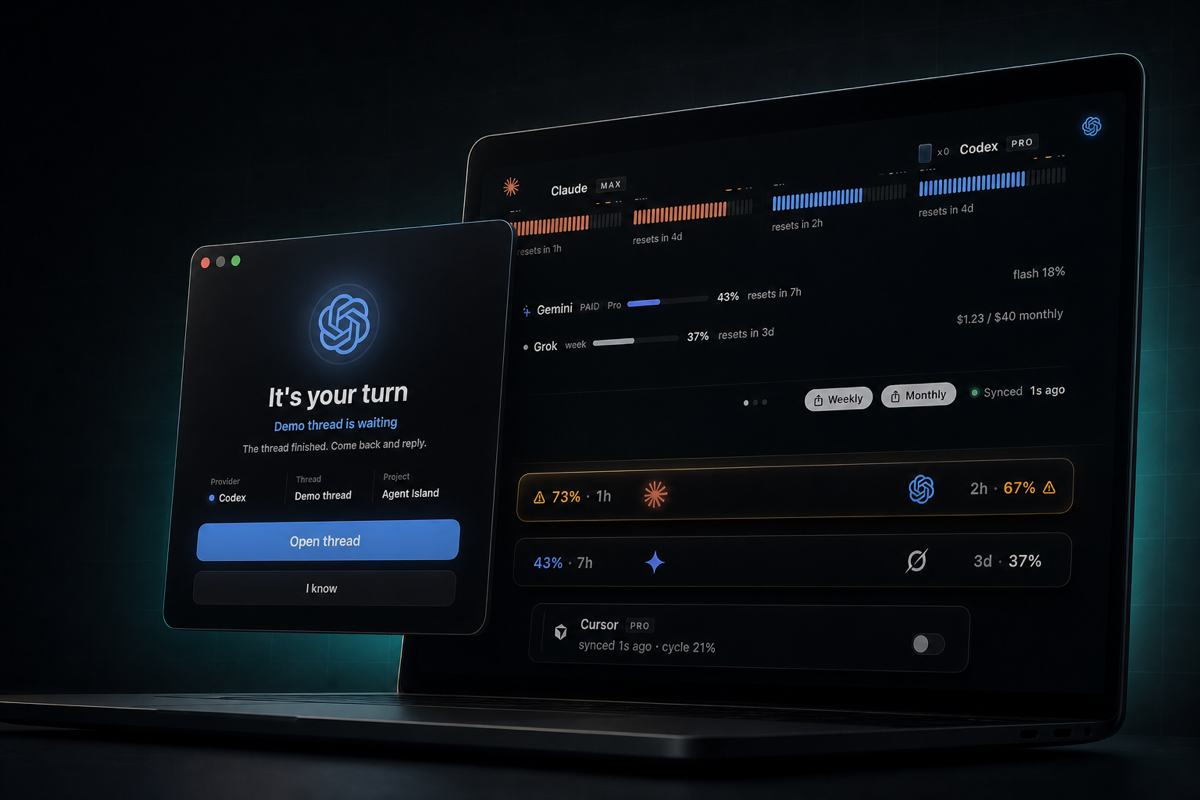
Monitor Codex state without alerting on every child task
Turn local rollout events into working, your-turn, stalled, and idle states with freshness and identity checks
Read article
Calculate AI coding token cost without calling it a bill
Price input, output, cache writes, and cache reads with a dated model table and a worked example
Read article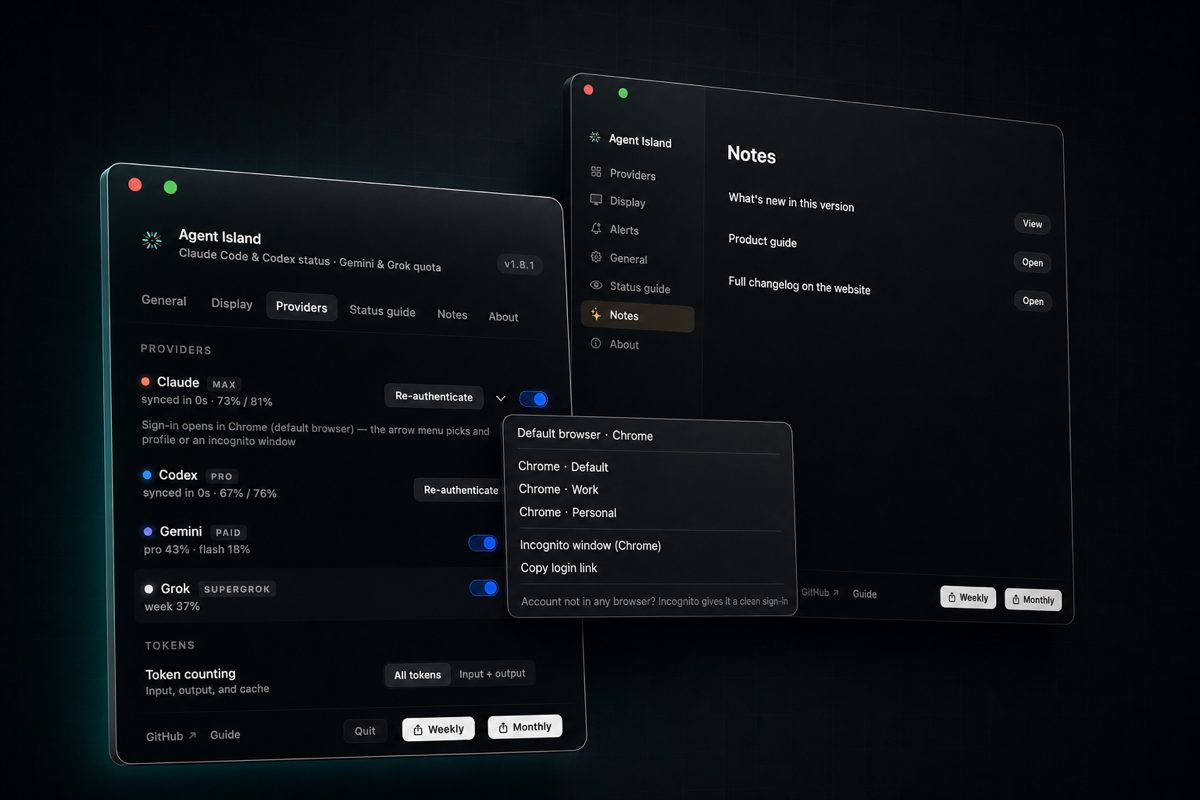
Fix Agent Island install and update problems
Separate macOS first launch, Windows ZIP extraction, package-manager versions, and update checks
Read article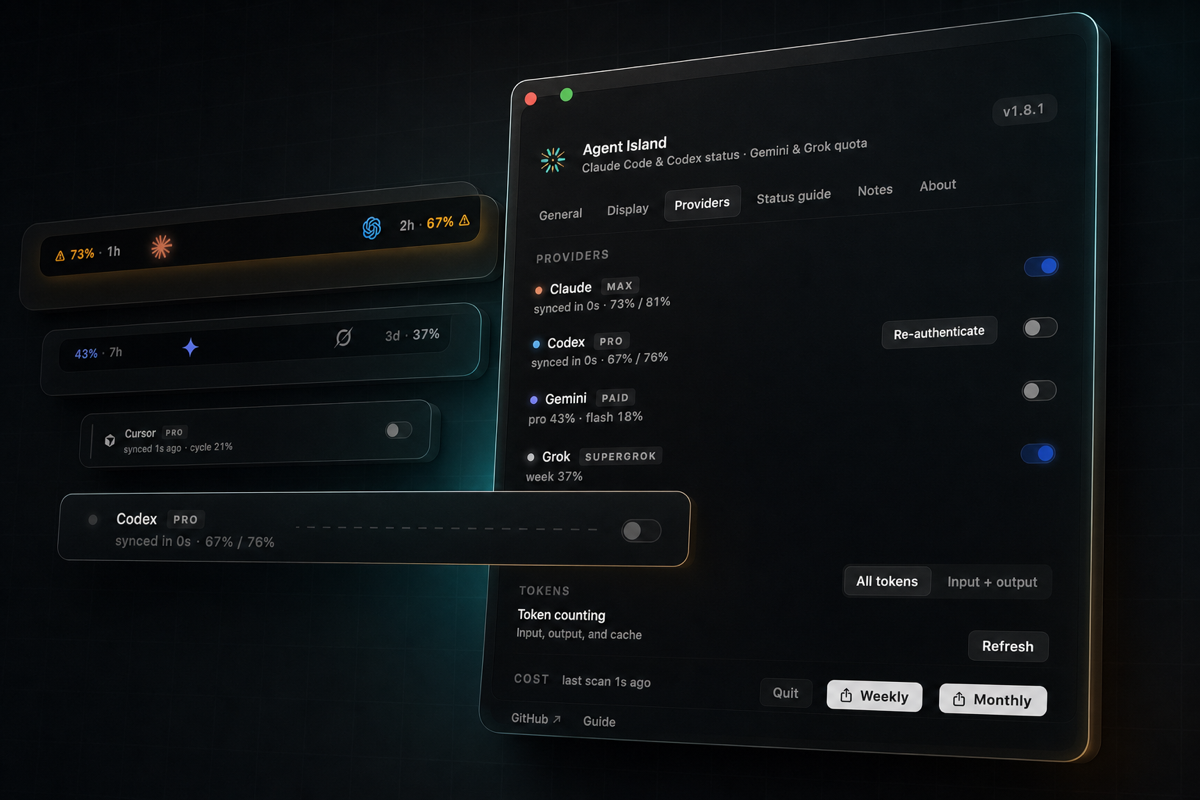
Find a missing Claude Code or Codex session
Check local session roots, identity records, recency, filters, and file access without sharing transcripts
Read article
Build one Claude Code and Codex state contract across macOS and Windows
Normalize provider events into shared turn semantics, stable keys, and cross-platform fixtures
Read article
Why filesystem events still need a polling fallback
Use FSEvents and FileSystemWatcher for low latency while a bounded sweep repairs missed notifications
Read article
Monitor large Claude Code transcript archives efficiently
Use append-aware cursors, bounded reads, and ordered evidence instead of repeatedly rescanning every transcript
Read article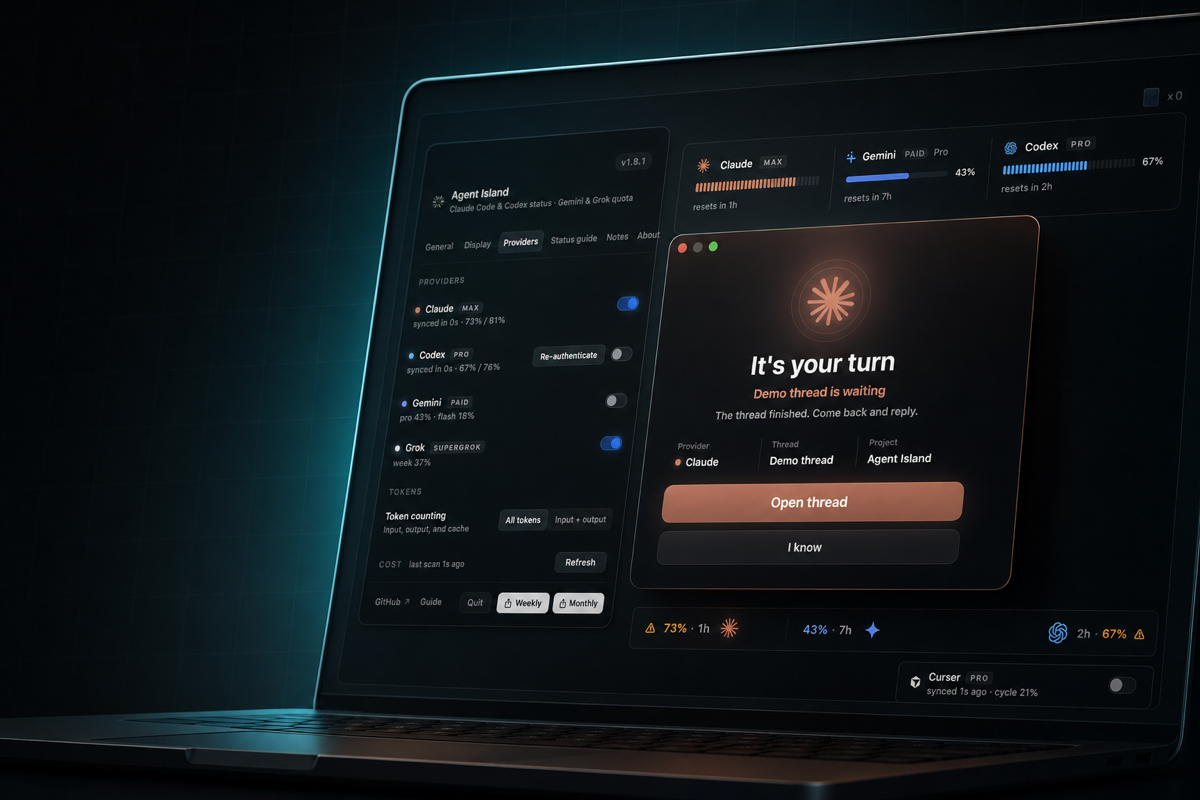
Separate Claude Desktop and Claude Code status on Windows
Keep application lifecycle, exact coding-session state, and provider usage authentication as independent signals
Read article
Run a local-first AI coding workflow
Bound agent authority, observe session state locally, and require evidence before security-conscious teams accept changes
Read article
Review multiple coding agents as a team lead
Partition ownership, rank attention by state, and accept work only after the diff, tests, and real surface are verified
Read article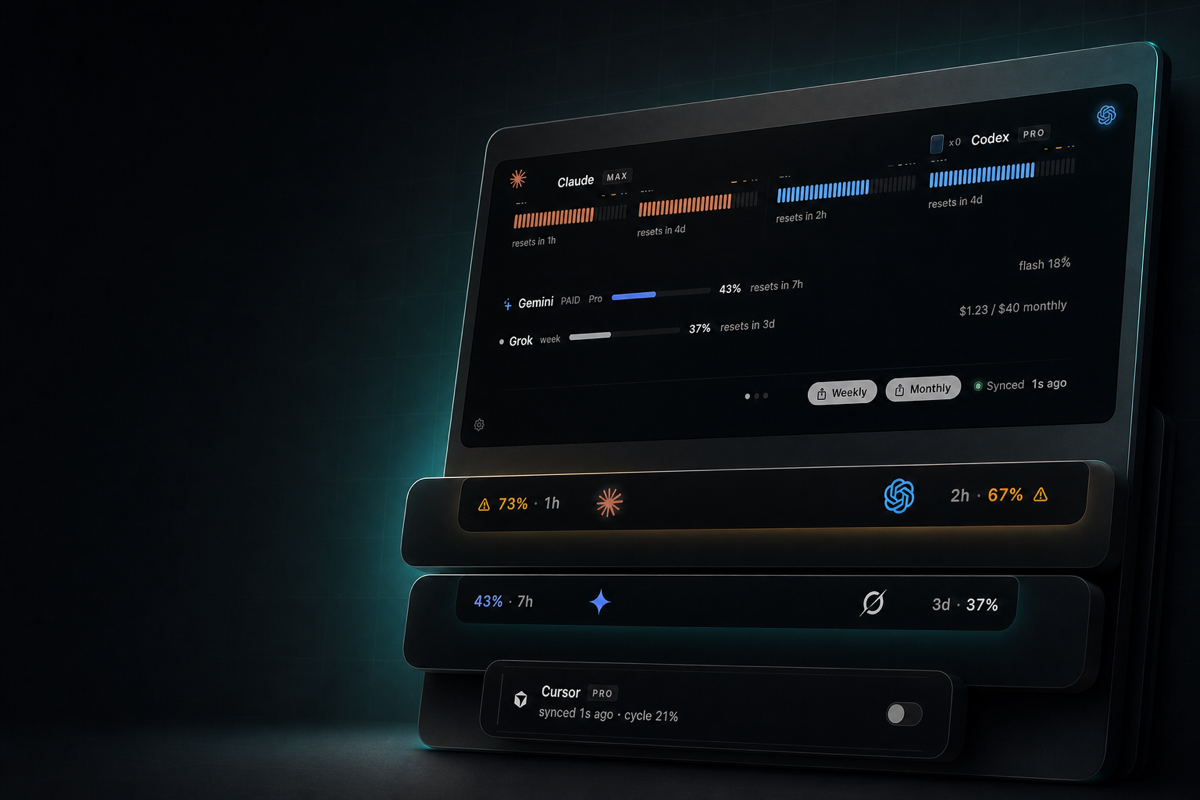
Define an AI coding status companion
Separate evidence-backed session visibility and your-turn alerts from agent execution, retries, and unsupported completion claims
Read article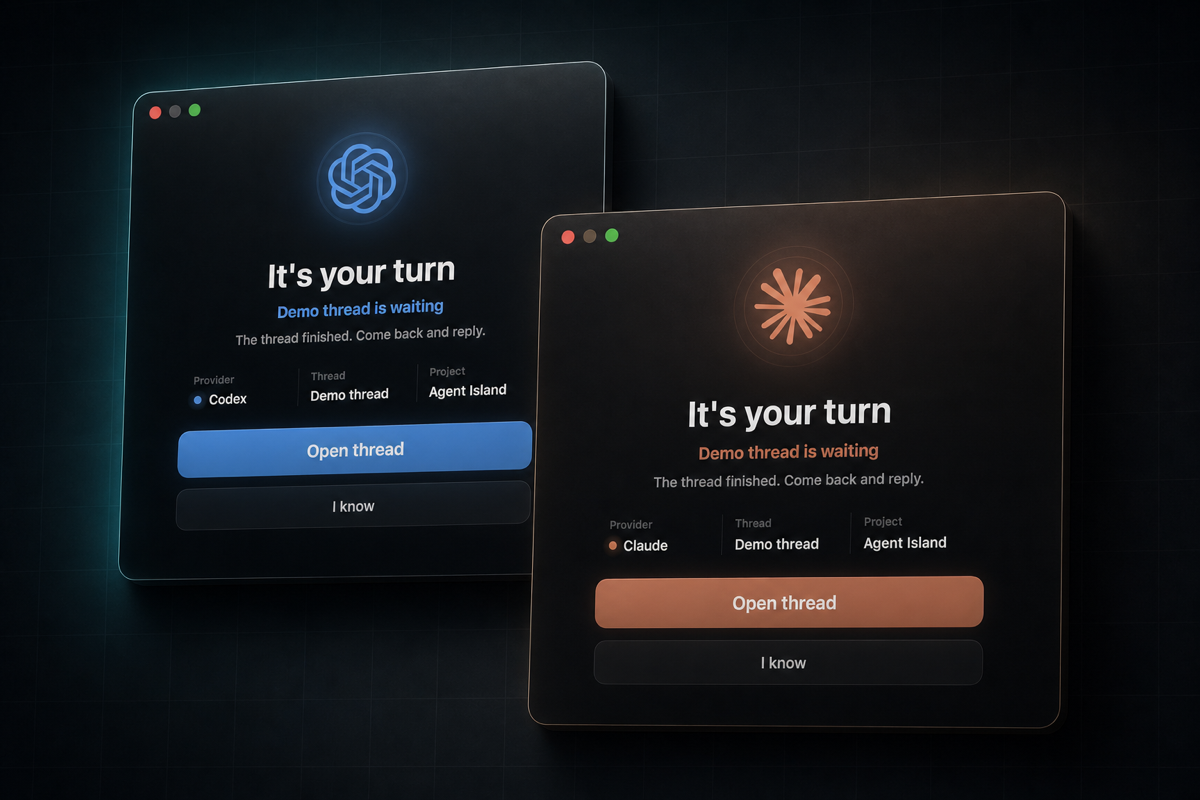
Define the your-turn state
Use semantic handoff evidence, preserve session identity, suppress duplicate noise, and avoid calling a quiet terminal finished
Read article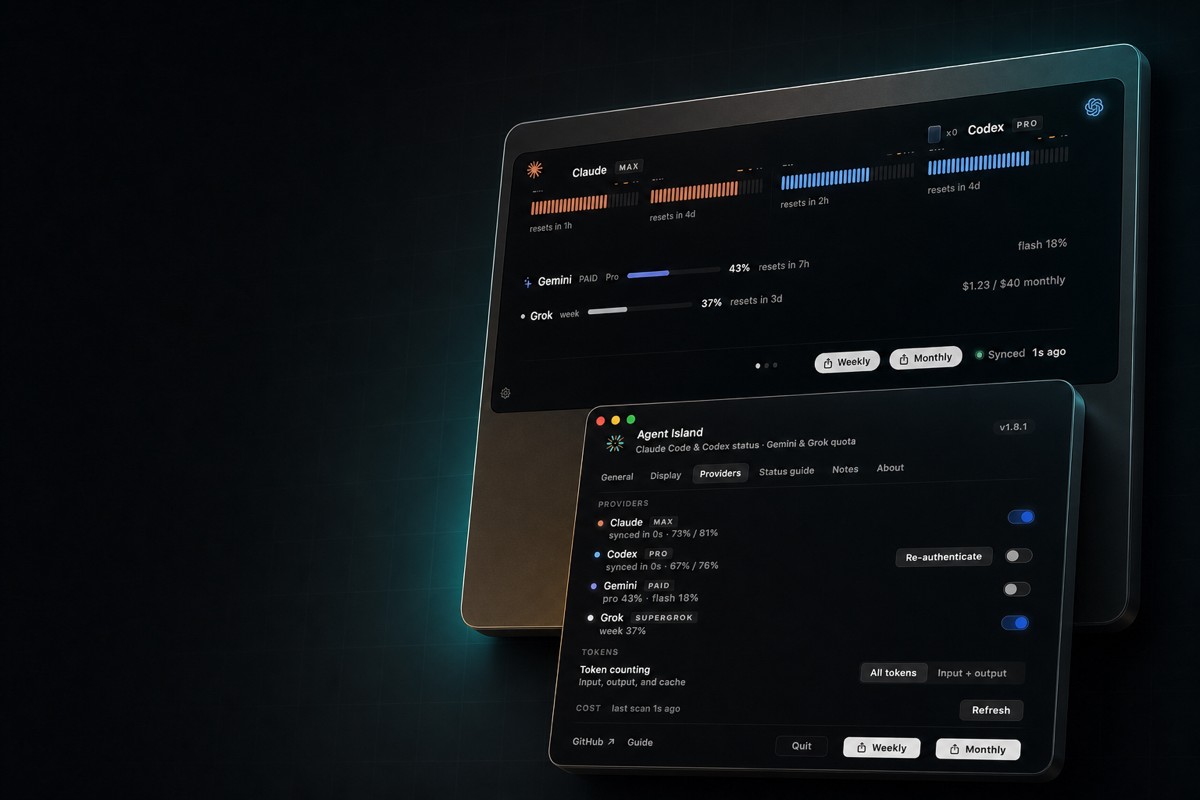
Audit an AI coding cost tracker
Check provider-specific token sources, cache accounting, replay protection, dated prices, and the billing boundary
Read article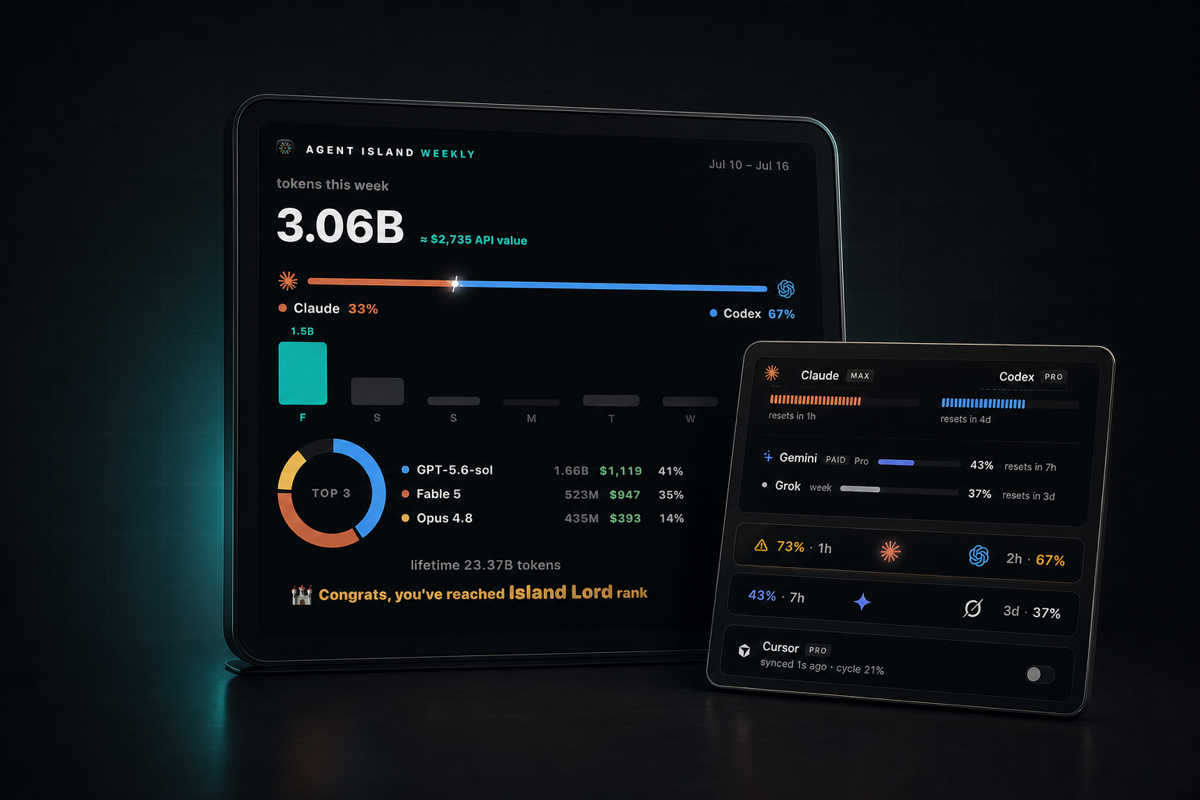
Read an AI coding weekly report honestly
Review local activity, provider and model mix, API-value estimates, and explicit sharing without inventing productivity
Read article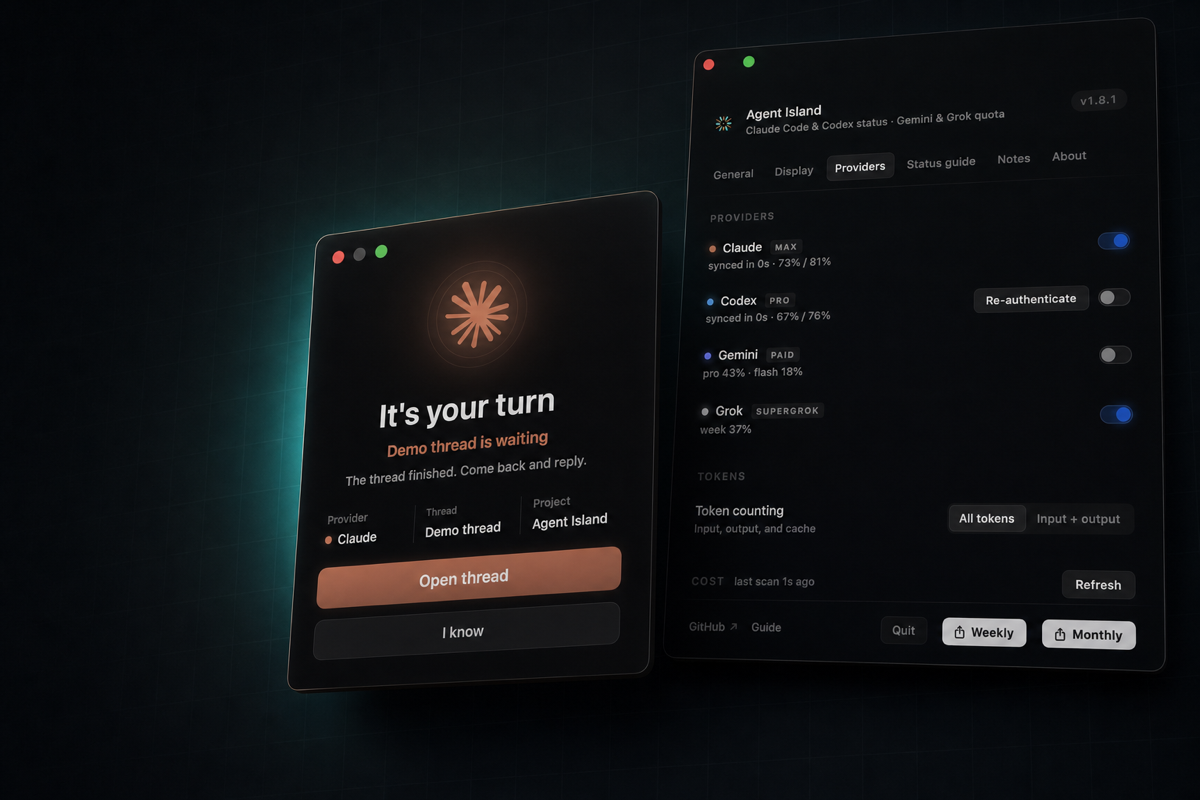
Evaluate a Claude Code status companion
Check session-state evidence, your-turn alerts, privacy, platform scope, and the boundary between visibility and execution
Read article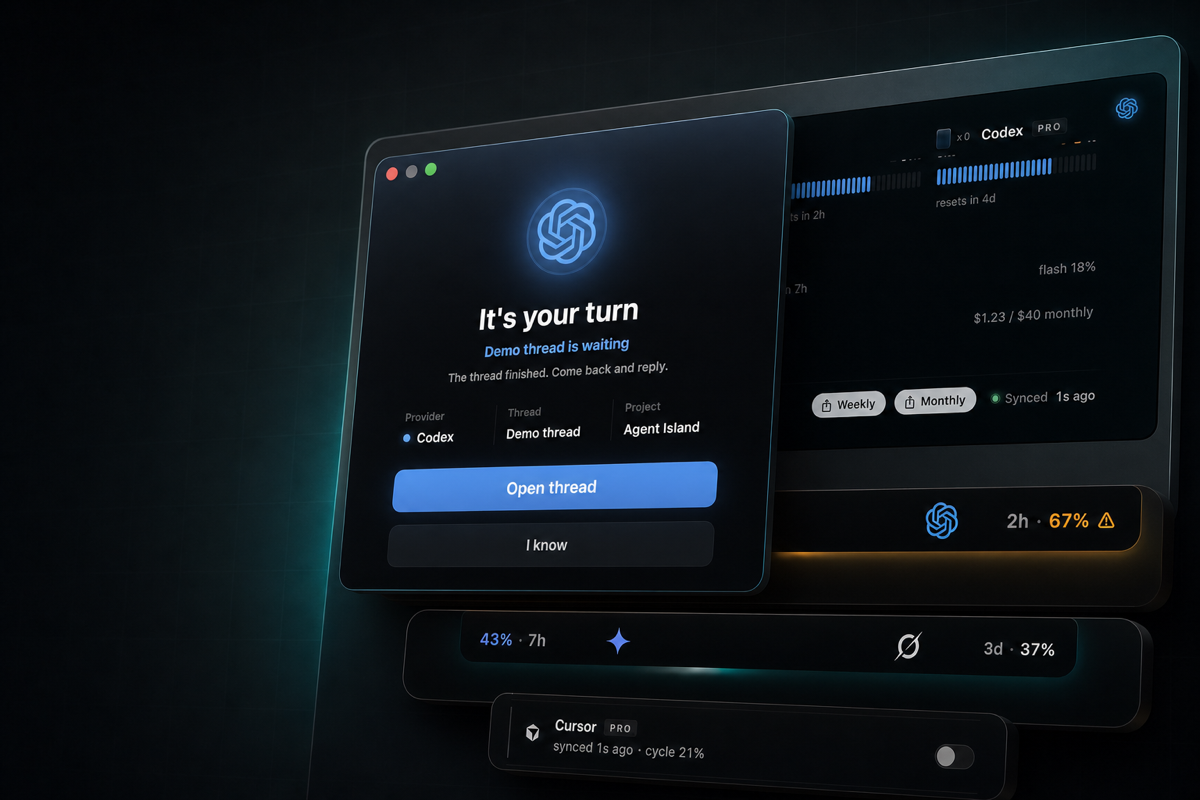
Evaluate a Codex status companion
Track exact session identity and the current weekly window without inventing quota data or billing precision
Read article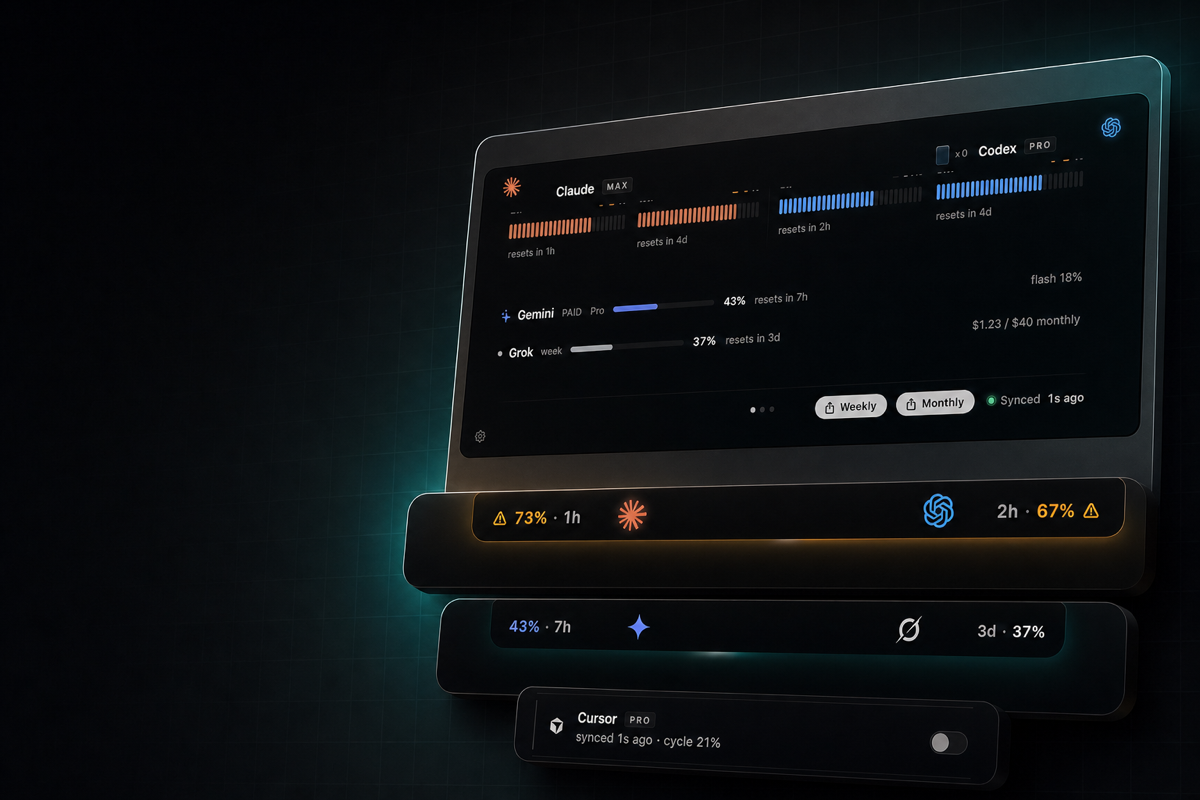
Track Claude Code quota, tokens, and estimated API value
Keep reset windows, local token activity, API-value estimates, and actual billing as four distinct signals
Read article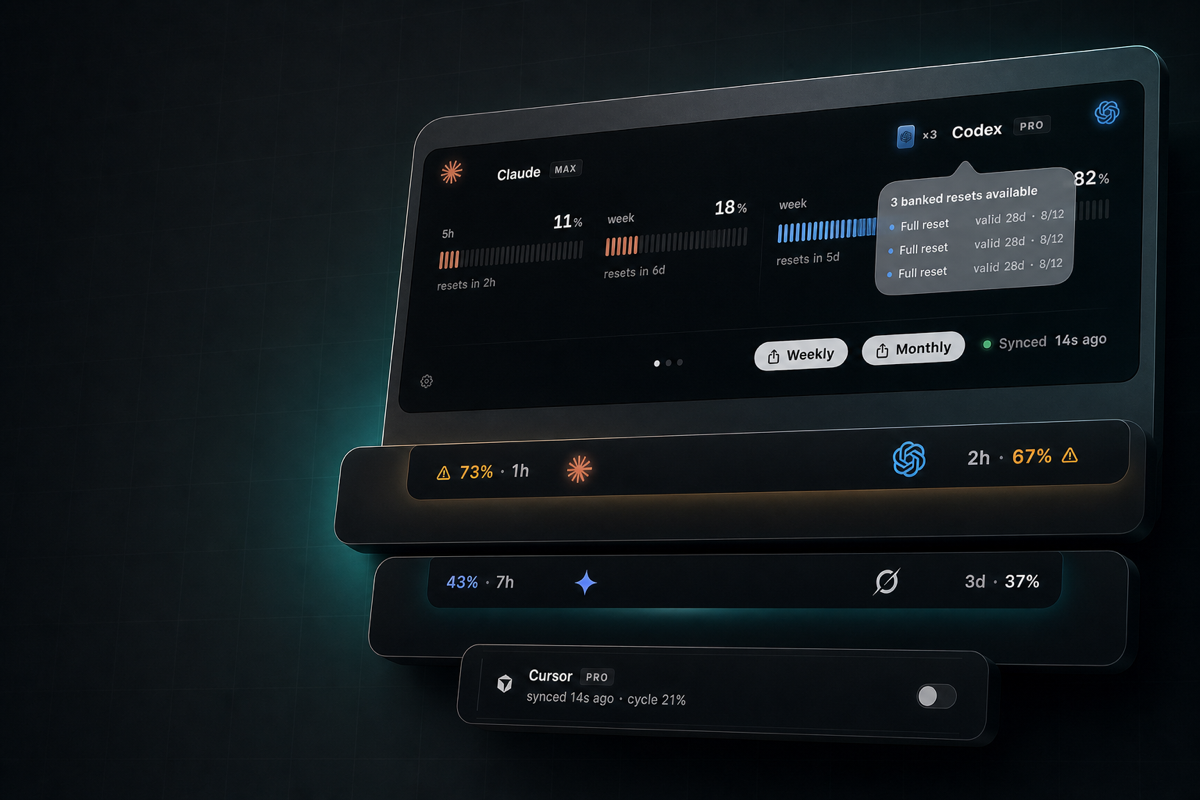
Track the current Codex weekly usage window
Use the weekly quota Codex reports today without recreating a stale 5-hour window or calling an estimate a bill
Read article
Rank multi-session coding-agent state by urgency
Aggregate several Claude Code or Codex sessions by actionability, then use recency only to settle equal states
Read article
Cache Claude and Codex usage per provider
Keep independent freshness timestamps so one successful refresh cannot renew another provider's stale data
Read article
Suppress coding-agent alerts without missing the handoff
Hold an alert only while its exact Claude Code or Codex session is already visible, then re-check it when focus changes
Read article
Keep a local AI session-log scanner bounded
Bound pathological JSONL lines, let wedged scans expire, and keep local Claude Code and Codex reports fresh
Read article
AI coding agent session states: seven-state taxonomy
The seven states a monitor should distinguish, with evidence rules, transitions, and a 12-test evaluation checklist
Read article
Claude Code hooks vs persistent session monitoring
What lifecycle hooks can observe, what a persistent monitor can reconstruct, and when a hybrid design is stronger
Read article
How to monitor multiple Claude Code and Codex sessions
Per-thread local state, provider-level priority, and turn-specific reminders that still point to the right session
Read article
Is your AI coding session stalled, working, or finished?
Turn events, semantic timestamps, and bounded freshness rules for Claude Code and Codex session status
Read article
Build a local Codex token usage ledger without replay errors
Replay guards, archived sessions, and event-time attribution for trustworthy local Codex usage
Read article
When an empty update feed strands old installs
Release polling, quiet background checks, version-specific snoozing, and the legacy bootstrap boundary
Read article
A completion event is not a session state
Turn identity, semantic timestamps, later-activity checks, and expiry rules for reliable coding-agent status
Read article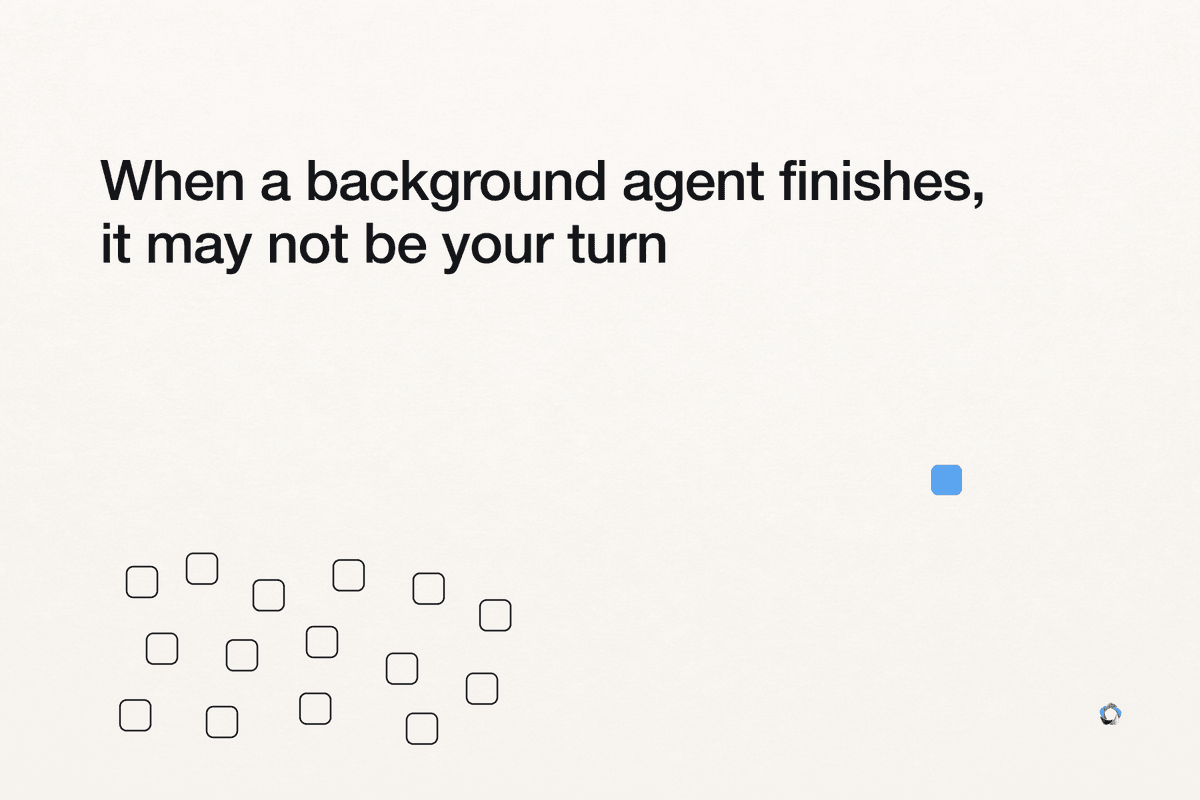
When a background agent finishes
Classify foreground sessions, background workers, and automation before completion can trigger an alert
Read article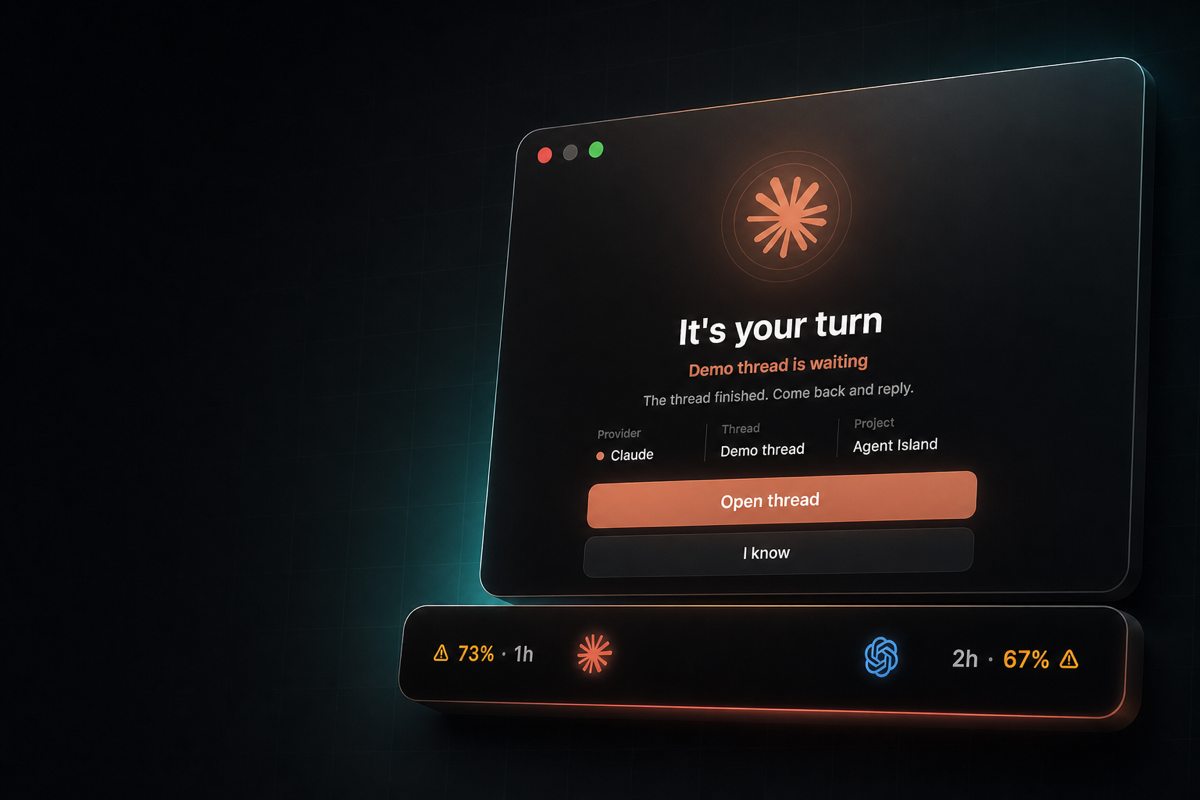
Claude Code status monitor
How local session events become working, your-turn, and attention states without turning stale files into fresh alerts
Read article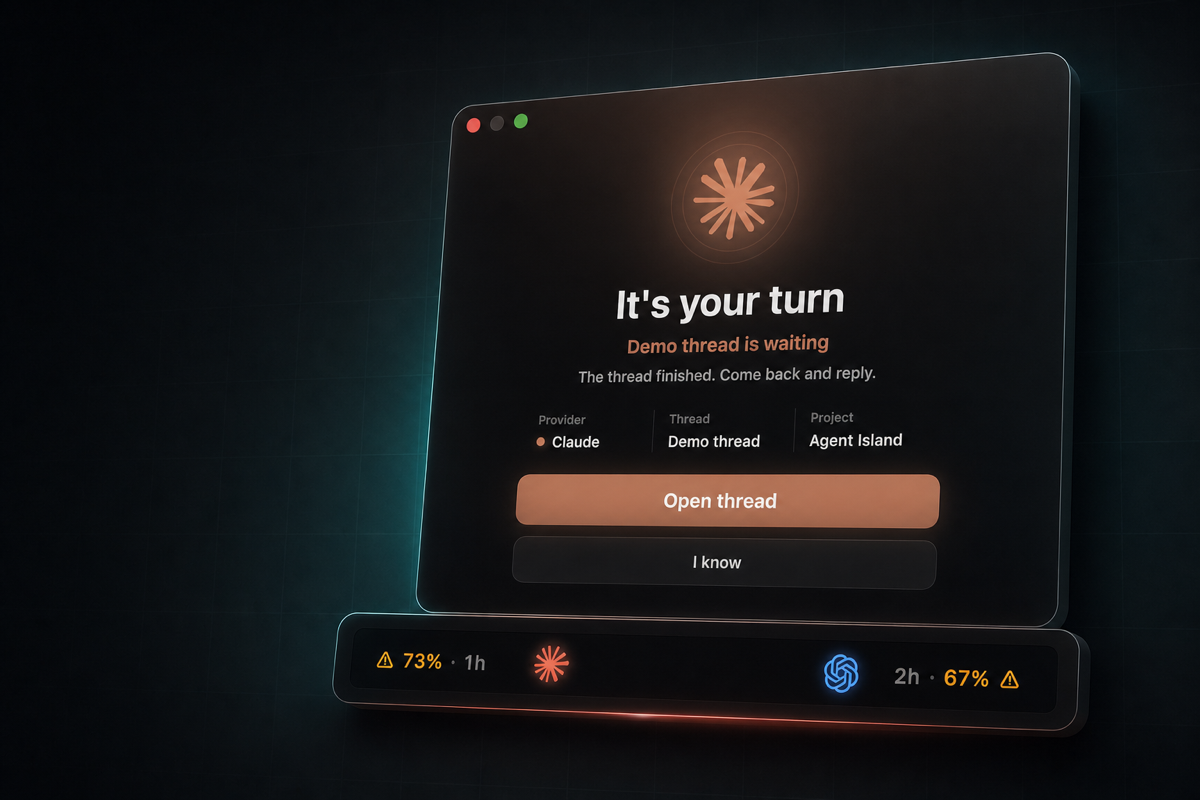
Get notified when Claude Code finishes
Set up your-turn alerts, return to the relevant session, and understand the freshness boundary behind each notification
Read article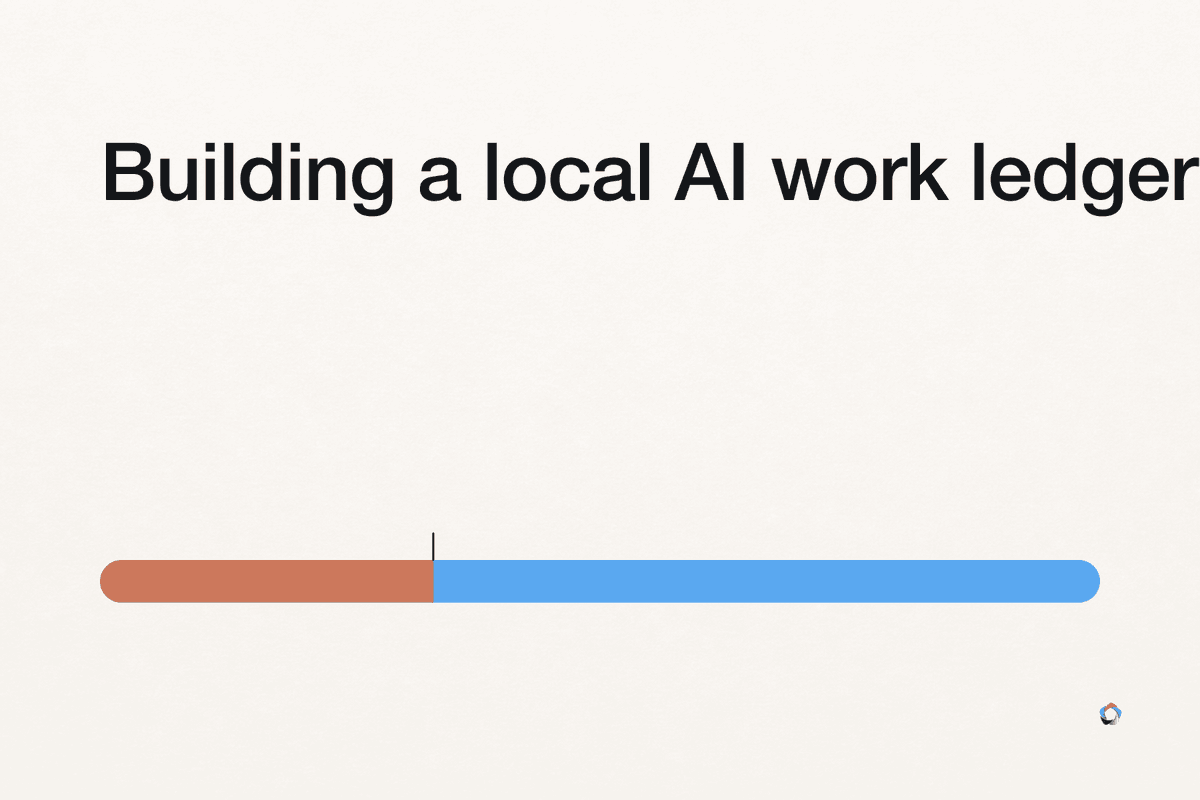
Building a local AI work ledger
Normalization rules for two JSONL formats, cache tokens, calendar windows, and a report that stays on your machine
Read articleWhat API value actually means
How to estimate local token activity without confusing a dated API-rate calculation with money paid or saved
Read article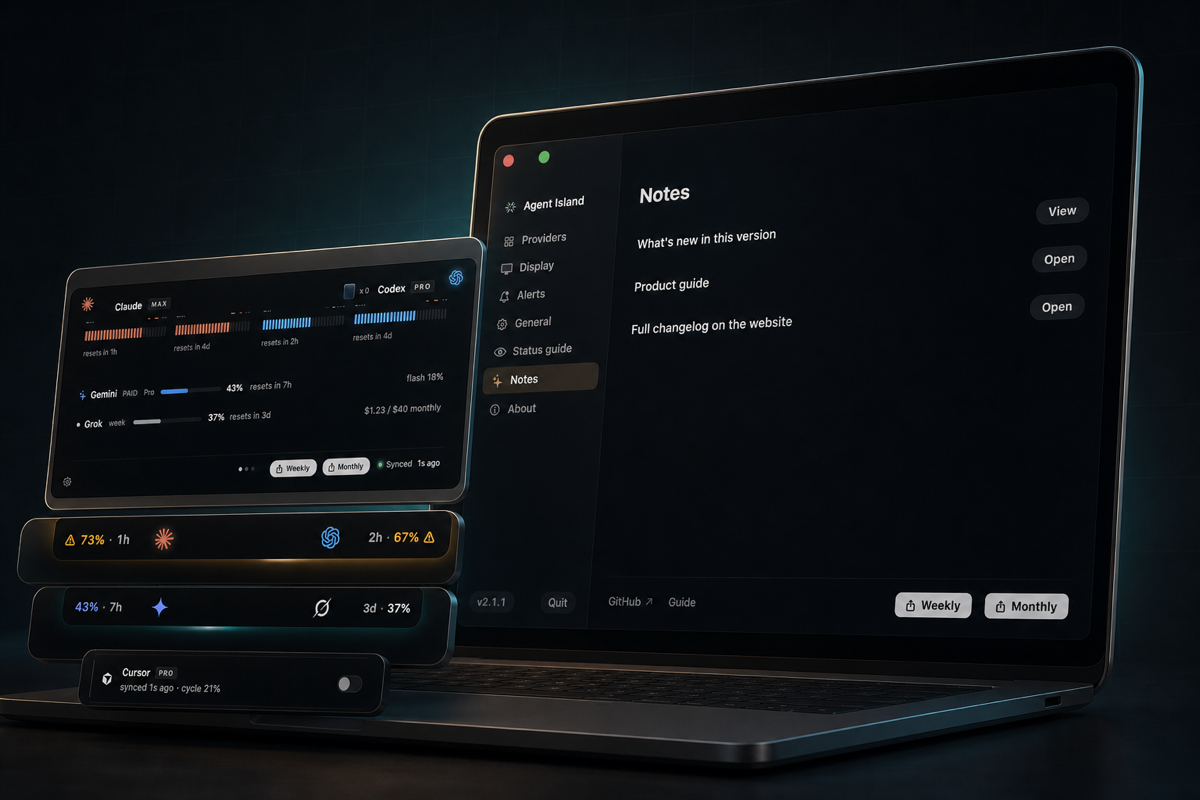
Release history
What changed in each public version, with direct links to the matching release assets
Read article
Detecting session state locally
A look at the local transcript and usage signals that become working, your-turn, stalled, rate-limited, or auth-required states
Read article
Install Agent Island
Install the current macOS or Windows build, then verify that local Claude Code and Codex sessions appear
Read article
How macOS updates stay verifiable
What the auto-update path checks, why version tags matter, and how to reason about update prompts safely
Read article
Designing your-turn alerts
Open issues are the place to shape the handoff moments that deserve status, usage, or a stronger interruption
Read articleThe local data boundary
What Agent Island reads, what stays on the machine, and what to redact when reporting a bug
Read article
Reading a Claude Code transcript JSONL
A field-level guide to transcript events, ordering, and the markers that end a turn
Read article
Parse AI coding JSONL safely
Defensive parsing for live logs: partial lines, replays, and schema drift
Read article